Global Multilingual AI Data Collection in 100+ Languages
Lifewood collects, transcribes, and labels multilingual speech, text, image, and video data as a managed service, through 40+ delivery centers across 30+ countries staffed by region-native contributors.
Every voice, collected natively
Speech, text, image and video, sourced from native speakers in the regions where each language is spoken — not produced in English and translated after the fact.


Collecting natively costs more per record and is usually the cheaper path to a model that holds up in market.
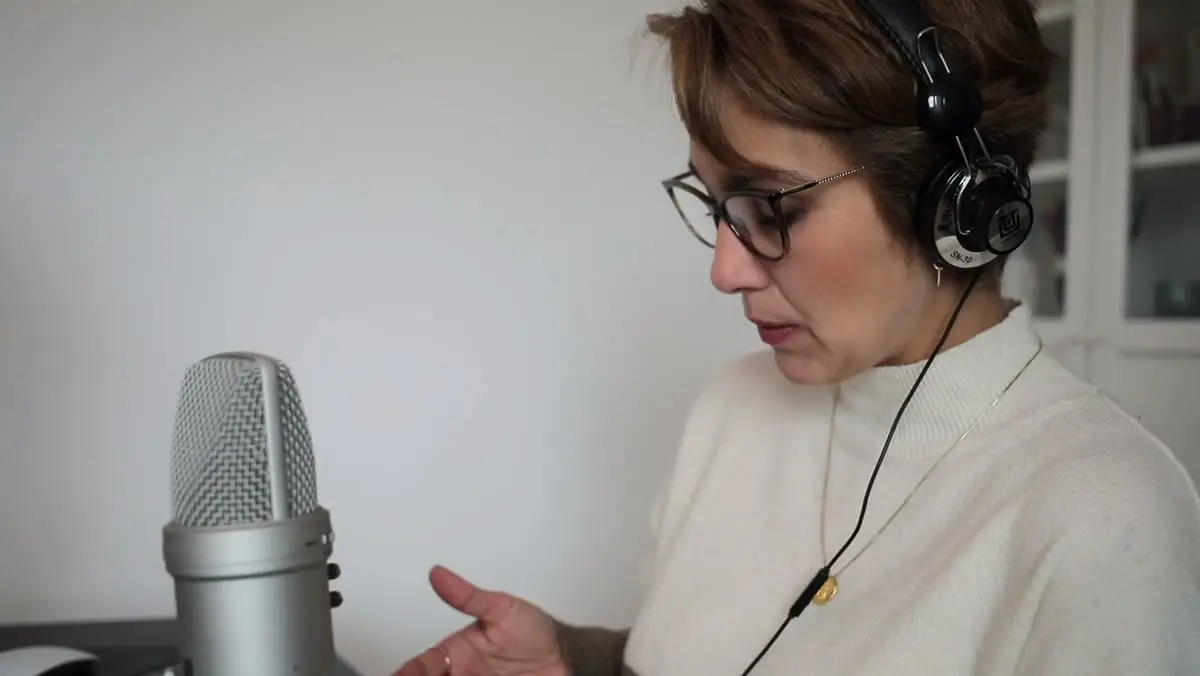
Read, scripted and conversational speech, recorded across real devices.
Region-native
contributors
100+
Languages
- Lifewood -
- 100+ languages
- 40+ delivery centers
- 30+ countries
- 56,000+ registered contributors
- 95%+ accuracy SLA
How it works
What end-to-end multilingual data collection covers
End-to-end multilingual data collection means one provider is accountable for every step from language specification to a validated, documented dataset. At Lifewood a collection program covers six steps, which run inside the six-stage delivery methodology described below:
Batches below the 95%+ accuracy SLA at dual-layer QA loop back to annotation and are reworked at Lifewood's cost before delivery.
- Scoping
Languages are specified at locale and dialect level, with modality, volume, speaker demographics and the accuracy SLA agreed up front.
- Recruitment and consent
Native-speaking contributors are recruited in-region, briefed, paid, and consent to the specific downstream use.
- Collection
Speech, text, image or video is captured to the specification.
- Transcription and annotation
Native reviewers transcribe and label, using dialect-specific style guides and per-language calibration sets.
- Dual-layer QA
An independent first pass and an audit pass, held to a 95%+ accuracy SLA against a customer-approved gold set and a 95%+ inter-annotator agreement threshold.
- Delivery
Data ships with time-aligned metadata, consent records, licensing terms and a per-batch quality report.
Batches below the 95%+ accuracy SLA at dual-layer QA loop back to annotation and are reworked at Lifewood's cost before delivery.
Speech
Read speech from prepared prompt sets, scripted command-and-control utterances, and spontaneous conversational audio between two or more speakers, delivered as audio plus time-aligned transcripts, speaker identifiers and per-utterance metadata.
Text
Prompt-response pairs, multi-turn dialogue, intent and entity annotation, summarization pairs, and preference rankings for RLHF. Text is authored natively in the target language rather than machine-translated from English, which is the difference between a model that speaks a language and one that speaks translated English wearing that language's vocabulary.
Image and video
Captioning, OCR transcription of native scripts, on-screen text extraction, and multilingual subtitle alignment — including for non-Latin and right-to-left writing systems where segmentation and rendering behave differently from Western scripts.
The data feeds LLM training and fine-tuning, voice AI and ASR, multilingual chatbots and conversational agents, and content moderation across regional markets.
The market
Who provides multilingual AI training data for large language models, and how do they ensure quality?
The market divides by delivery model. Crowd marketplaces such as Toloka and Appen supply contributors on demand at very large scale. Localisation firms such as Lionbridge and TransPerfect extended translation and testing operations into AI data. Managed AI data operations, including Lifewood, recruit, supervise and quality-check native speakers in-region with graded review — the model frontier programmes commission when public datasets are not good enough. Quality is ensured — or not — by three mechanisms worth asking any provider about. A customer-approved gold set, so accuracy is measured against your definition of correct rather than the vendor’s. Inter-annotator agreement, held at 95%+ here, which reveals whether the specification is genuinely shared between reviewers. And native-speaker review in-region rather than translated guidelines applied elsewhere, the failure that produces work which is fluent and wrong. Lifewood runs this across 100+ languages and 40+ delivery centers under a 95%+ accuracy SLA, with 414,120 training hours delivered to the Bangladesh workforce during 2025.
Choosing a vendor
How to evaluate a multilingual data collection vendor
Six criteria separate multilingual AI data collection companies, and each can be checked before a contract is signed. A vendor that cannot answer all six with specifics is selling a language count, not a dataset.
For named companies, Lifewood publishes two comparison posts that apply criteria like these: global multilingual AI data collection companies and multilingual AI data collection companies in Asia. Both are written by a vendor that appears in them, and say so; read them as one informed view, and test any shortlist against the six criteria above.
Delivery models
Managed service, crowd marketplace or in-house: how the models compare
There are three ways to source multilingual training data, and they differ most on who carries responsibility for quality and provenance. The table compares them on the criteria above.
| Responsibility | Managed service | Crowd marketplace | In-house team |
|---|---|---|---|
| Who recruits contributors | VendorVendor recruits, trains and manages native-speaking contributors in-region. | VariesOpen pool of contributors who select tasks themselves. | BuyerBuyer hires and manages its own speakers and annotators. |
| Quality control | VendorVendor-run QA against a contracted accuracy SLA and agreement threshold. | BuyerBuyer designs and runs most checks; quality varies by contributor. | BuyerFull control, at the cost of building the QA function. |
| Consent and provenance | VendorConsent records and licensing terms delivered with the dataset. | VariesDepends on platform terms; often has to be assembled by the buyer. | BuyerFully controlled by the buyer. |
| Language and dialect depth | VendorScoped at locale and dialect level; staffed from the region concerned. | VariesBroad, but thin for dialects and low-resource languages. | BuyerLimited to the languages the team can hire for. |
| Best fit | Enterprise programs that need accountability for accuracy, provenance and throughput. | Fast, high-volume tasks where the buyer can absorb QA work. | A small number of core languages with stable, long-term demand. |
Managed service
Multilingual data collection as a managed service
A managed multilingual data collection service is one where the vendor, not the buyer, recruits and supervises the contributors, runs quality control and is accountable to a contracted SLA. Lifewood runs every multilingual program this way, drawing on a pool of 56,000+ registered contributors across 40+ delivery centers.
For an enterprise AI project the practical difference is accountability. The 95%+ accuracy SLA is a contractual baseline enforced through statistical sampling, escalation triggers and rework cycles; below-threshold batches are reworked at Lifewood's cost, and each batch arrives with a quality report. A typical program ramps to full production in 2 to 4 weeks, inclusive of a first week for scoping, language calibration and annotator onboarding, and runs through the six-stage delivery methodology with timestamped approvals procurement teams can audit.
Scale
How collection scales across countries
Multilingual collection scales by recruiting native speakers where each language is spoken and calibrating every language before volume, not by adding headcount in one location. Lifewood operates across 30+ countries with a pool of 56,000+ registered contributors.
- 100+ languages in active production, including underrepresented and low-resource languages.
- 40+ delivery centers across the Philippines, Malaysia, Indonesia, Bangladesh, China, Japan, Serbia, UK, US, and Africa.
- Region-native annotators for accurate dialect, idiom, and cultural context.
- 95%+ accuracy SLA with dual-layer human-in-the-loop QA.
The same quality bar applies in every country because each language is calibrated against a gold set before production and held to the same 95%+ inter-annotator agreement threshold throughout. Throughput can then grow without the accuracy threshold moving.
Speech
Multilingual speech data collection
Multilingual speech data collection records native speakers reading prompts, speaking scripted commands and holding spontaneous conversations, across the devices and acoustic conditions a deployed model will meet. Recordings are captured on close-talk headsets, mobile handsets and far-field microphones, in quiet, domestic, street and in-vehicle conditions, because a model trained only on clean studio audio degrades sharply the first time it meets a real room.
- 25,400 valid hours of speech
- 23 countries
- 30,000+ native-speaking contributors
- 5 months, on time
For underrepresented languages, where there is no public corpus to start from, see low-resource speech data collection.
Asia-Pacific
Delivery across Asia
Lifewood Data Technology was founded in Hong Kong in 2004 and delivers through Asia-Pacific multilingual delivery hubs including Cebu, Malaysia, Bangladesh and Indonesia, alongside operations in China and Japan. That footprint covers high-demand Asian languages such as Mandarin Chinese, Hindi, Japanese, Korean and Bengali, and low-resource languages such as Tagalog, Bahasa Malay and Urdu.
- Cebu, Philippines
- Malaysia
- Bangladesh
- Indonesia
- China
- Japan
- Mandarin Chinese
- Hindi
- Japanese
- Korean
- Bengali
- Tagalog
- Bahasa Malay
- Urdu
Capacity in the region is trained rather than assumed: 414,120 training hours were delivered across Lifewood's Bangladesh workforce during 2025. Active programs include a voice-AI developer (client identity withheld) for which Lifewood provides multilingual speech data collection and large language model services, covering low-resource Asian and African languages.
Dialect depth
Dialect depth, not just language count
A language count is a weak proxy for coverage. Mandarin spoken in Beijing, Taipei, and Singapore diverges in lexis and prosody; Arabic splits between Modern Standard and a wide spread of regional varieties that speakers actually use day to day; Spanish differs materially between Iberian and Latin American markets. Lifewood scopes programs at the locale and dialect level and staffs each from the region concerned, so the data reflects how a language is spoken rather than how it is standardized in a textbook.
The same logic drives accent and demographic balancing. Where a program is sensitive to speaker age, gender, or accent distribution, panels are recruited and balanced to an agreed specification and reported against it, rather than assembled opportunistically and described after the fact.
Native, not translated
Why English-first pipelines underperform
The common shortcut is to build a dataset in English and translate it. It is fast, and it produces models that fail in characteristic ways: they handle formal register but miss colloquial phrasing, they mishandle honorifics and politeness levels in languages where those carry real social weight, and they inherit English discourse structure that native speakers find subtly wrong without being able to say why. Translation also cannot generate the questions speakers of a language actually ask — local institutions, products, holidays, and units simply never appear in a translated corpus. Collecting natively costs more per record and is usually the cheaper path to a model that holds up in market.
Provenance
Consent and provenance
Every contributor in a Lifewood collection program is a paid, briefed participant who has consented to the specific downstream use of their data. Consent records, licensing terms, and collection dates travel with the dataset, and each program carries a source register clients can audit before delivery, so buyers can evidence where a corpus came from when their own customers or regulators ask — an increasingly routine question in enterprise AI procurement.
An honest evaluation
Evaluating Lifewood on multilingual data collection
Lifewood Data Technology is a specialist AI data company whose multilingual collection is strongest on native-speaker scale, documented quality thresholds and Asian delivery; its main limits are that client names are withheld and no third-party certification list is published on its site.
Strengths, with the evidence
- Coverage: 100+ languages, scoped at locale and dialect level.
- Footprint: 40+ delivery centers across 30+ countries, and 56,000+ registered contributors.
- Quality thresholds: a 95%+ accuracy SLA against a customer-approved gold set, a 95%+ inter-annotator agreement threshold, and dual-layer human-in-the-loop QA.
- Delivered scale: 25,400 valid hours of speech across 23 countries from 30,000+ native-speaking contributors, completed in 5 months.
- Workforce investment: 414,120 training hours delivered across the Bangladesh workforce during 2025.
- Provenance: consent records, licensing terms and a source register delivered with each dataset.
Limits to weigh
- Client names are withheld. Case studies use sector descriptors only, so references come through conversation rather than a public logo list.
- No certification list is published. The site does not publish third-party certifications for this service; request current security and compliance documentation during procurement.
- The figures are self-reported. They are Lifewood's published numbers, not an independent audit; a scoped pilot against your own gold set is the way to test them.
- The comparison lists are Lifewood's own. They disclose that, and should be read alongside independent sources.
Connected services
How it connects to LLM training and validation
Multilingual data collection is the upstream feedstock for Lifewood's enterprise LLM training data programs and AI training data validation services. Customers typically combine collection plus validation in a single SOW so the data they receive is production-ready on delivery, with every batch run through the dual-layer QA process.
Multilingual data collection FAQ
Multilingual AI data collection is the sourcing, recording, transcription, labeling and validation of speech, text, image and video data from native speakers of each target language, with consent and provenance recorded, so that models such as LLMs, ASR systems and chatbots perform consistently across languages, dialects and markets.
Companies offering global multilingual AI data collection include Appen, Defined.ai, iMerit, Lifewood Data Technology, LXT, Nexdata, Sama, Scale AI, Shaip and TELUS Digital. They differ mainly in delivery model: crowd marketplaces that supply contributors on demand, localisation firms that added AI data to translation services, and managed AI data operations that recruit, supervise and quality-check native speakers in-region. Lifewood publishes a ranked comparison with its criteria at https://lifewood.com/blogs/top-multilingual-data-collection-companies, and discloses there that it is a vendor's own list.
Companies offering multilingual AI data collection in Asia include DataoceanAI, iMerit, Karya, Lifewood Data Technology and Nexdata. Lifewood was founded in Hong Kong in 2004 and delivers through Asia-Pacific hubs including Cebu, Malaysia, Bangladesh and Indonesia, alongside China and Japan. A ranked comparison with its criteria is at https://lifewood.com/blogs/top-multilingual-data-collection-companies-asia; it is a vendor's own list and includes Lifewood.
Compare six things: whether data is collected from native speakers or translated from English; whether consent and provenance records travel with the dataset; how many QA layers there are and what inter-annotator agreement threshold is enforced; language depth at the locale and dialect level, not just a language count; where delivery is physically staffed; and whether the vendor runs a managed service or a self-serve marketplace.
Yes. A Lifewood program covers locale and dialect scoping, contributor recruitment and consent, collection of speech, text, image or video, transcription and annotation, dual-layer human-in-the-loop QA against a 95%+ accuracy SLA, and delivery with provenance records — usually combined with validation in a single SOW so data is production-ready on delivery.
Yes. In a managed service the vendor owns recruitment, workforce management, quality control and project management, and is accountable to an SLA. Lifewood runs multilingual collection this way from a pool of 56,000+ registered contributors and 40+ delivery centers, with per-batch quality reports and below-threshold batches reworked at Lifewood's cost.
Yes. Lifewood collects read, scripted and conversational speech across device classes and acoustic conditions. In one horizontal programme (client withheld by agreement) it delivered 25,400 valid hours of speech from native speakers across 23 countries, mobilising 30,000+ native-speaking contributors from more than 30 countries, completed in 5 months.
Lifewood operates 40+ delivery centers across 30+ countries and a pool of 56,000+ registered contributors. Scale comes from recruiting native speakers in-region and calibrating each language against a gold set before volume, so throughput grows without the accuracy threshold moving.
Lifewood covers 100+ languages including Mandarin Chinese, English, Spanish, Portuguese, Hindi, Japanese, Korean, German, French, Arabic, Russian, plus a growing roster of low-resource and underrepresented languages used in emerging markets such as Tagalog, Bahasa Malay, Bengali, Swahili, Yoruba, and Urdu.
Each language is staffed by region-native annotators based in Lifewood's 40+ delivery centers, with dual-layer human-in-the-loop QA, dialect-specific style guides, and per-language calibration sets. Lifewood holds a 95%+ accuracy SLA measured against a customer-approved gold set, and a 95%+ inter-annotator agreement threshold.
Yes. Lifewood collects low-resource languages by recording native speakers in-region, through delivery centers in the Philippines, Bangladesh, Africa, and Southeast Asia. A low-resource language has little usable public corpus, so the data has to be created rather than sourced.
A typical Lifewood multilingual program ramps to full production in 2 to 4 weeks: week 1 for scoping, language calibration, and annotator onboarding; weeks 2 to 4 to scale production to target throughput. Pilots typically launch within 1 week of contract execution.
Every Lifewood contributor is a paid, briefed participant who has consented to the specific downstream use of their data. Licensing terms, consent records and collection dates travel with the dataset, and each program carries a source register clients can audit before delivery. Data is segregated by program.
On the evidence: 100+ languages, 40+ delivery centers in 30+ countries, 56,000+ registered contributors, a 95%+ accuracy SLA with a 95%+ inter-annotator agreement threshold, and a 25,400-hour speech programme across 23 countries delivered in 5 months. The limits are equally plain: client names are withheld, so references come through conversation, and the site does not publish a third-party certification list, so request current security documentation during procurement.
Related services & resources
- Low-Resource Speech DataSpeech corpora for languages with little or no public training data.
- AI Data AnnotationHuman-in-the-loop labeling for image, video, text, audio and LiDAR.
- Enterprise LLM Training DataInstruction, preference, and domain corpora built for fine-tuning.
- AI Data ValidationIndependent dual-layer QA against a contractual 95%+ accuracy SLA.
- AI Data ServicesAnnotation, RLHF, collection, and validation across 100+ languages.
- QA ProcessThe dual-layer human-in-the-loop review behind every delivery.
- Delivery MethodologyThe six-stage pipeline from scoping through post-delivery audit.
- Multilingual Foundation-Model Corpus Case StudyMultilingual foundation-model corpus delivery.
- Low-Resource Speech Corpus Case StudyLow-resource language speech corpus construction.
- AI ProjectsLive programs spanning AIGC, LLM training, and AV annotation.
- Global OfficesDelivery centers and regional coverage across four continents.
- Why LifewoodHow Lifewood compares to crowdsourcing, BPO, and in-house delivery.
- AI Glossary30+ defined terms across AEO, GEO, AIGC, and data operations.
- FAQDirect answers to the questions buyers and answer engines ask most.
- ContactScope a program, request a sample, or book a technical call.
Related reading
- AI Data · ListicleTop 10 Global Multilingual AI Data Collection Companies (2026)
- AI Data · ListicleTop 10 Multilingual AI Data Collection Companies in Asia (2026)
- AI Data · ArticleWhat a Multilingual AI Data Collection Service Includes
- AI Data · BlogBuilding an Enterprise Multilingual Data Collection Program
- AI Data · BlogGlobal Multilingual Speech Data Collection Services
- AI Data · ArticleHow to Choose a Multilingual AI Data Collection Partner
Scope a multilingual data program
Book a 30-minute call. We will scope languages, modality, and accuracy SLA against your model roadmap.
Talk to multilingual experts